Four | Buy Now, Pay Later
- 4.4
- Rating
- 1.00M
- Installs
- Free
- Price

 Analysis by App-foxy
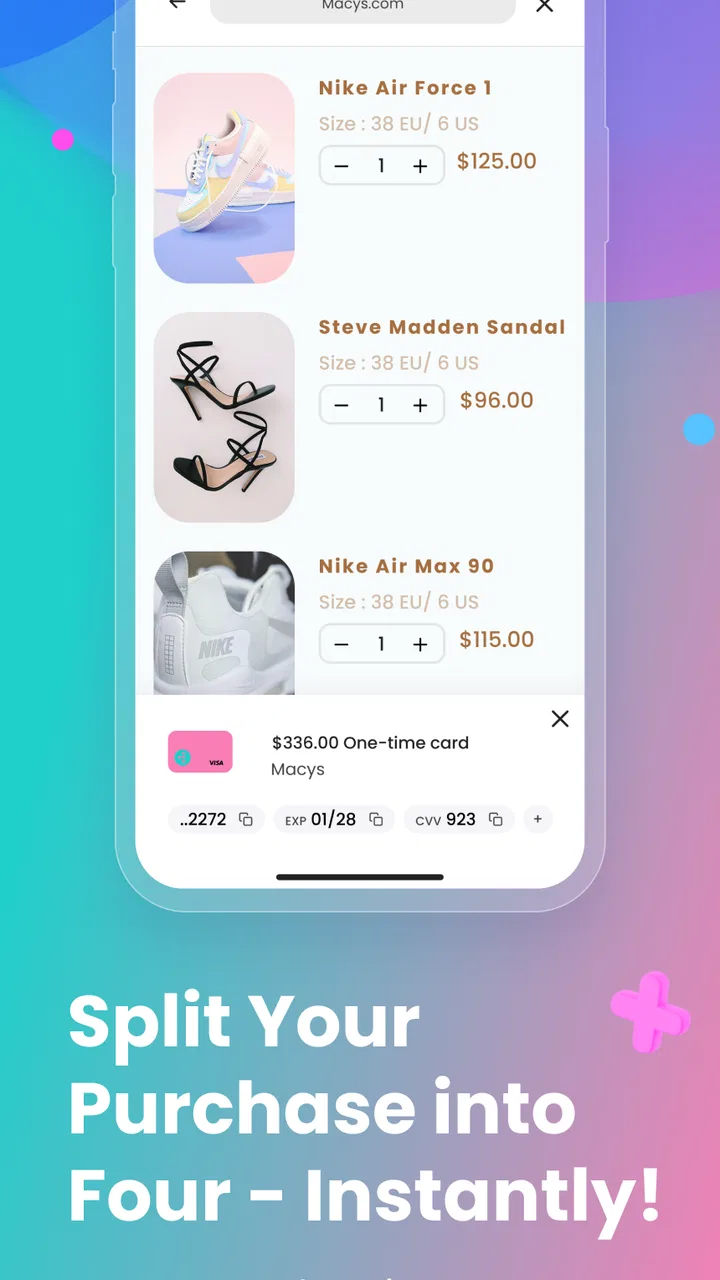
Four is the kind of shopping app I would consider when I want to spread the cost of a purchase rather than pay everything at once. Developed by Four Technologies, Inc., it sits in the shopping category and is built around a simple idea: choose an item online, use Four at checkout, and divide the payment into a schedule that feels easier to manage. My overall view is positive, but with an important warning: the convenience is useful only when I treat the payment plan as a budgeting tool, not as extra spending power.
That distinction shapes the whole experience. Four is free to download, available to everyone by age rating, and supports devices running Android 6.0 or later. It has reached over a million installs and holds a 4.6 average from around eleven thousand ratings, with roughly four thousand seven hundred written reviews. Those figures suggest that the app has found a real audience, but they do not remove the need to read each repayment detail carefully before confirming a purchase.
How Four feels when used for an online purchase
The first thing I noticed is that Four is not trying to be a general marketplace. It is a payment option for online shopping. That makes the app more focused than a large retail application, where browsing products, tracking orders, collecting loyalty rewards, and handling payments all happen in one place. With Four, the central question is whether dividing a purchase into smaller payments makes sense for me at that moment.
You May Also Like

 Blood Strike: 2.5 Anniversary
Blood Strike’s Loadouts Turn Every Drop Into a Tactical Gamble
A close look at Blood Strike’s custom loadouts: how fast access to signature weapons reshapes its battle royale rhythm, rewards preparation, and narrows the gap between fights.

 Pandora - Music & Podcasts
Pandora’s Music Is Easy to Start, but Harder to Recover
Pandora’s strength is its low-effort path from a seed to a station. Its weak spot is how much confidence it asks you to place in connection, setup, and quiet recovery.

 8 Ball Pool
 Is Built on Rivalries, Rematches, and Routine
A close look at the rivalries, rematches, shared routines, and unanswered safety questions that turn a quick pool match into a persistent mobile community.

 Samsung Music
’s Quiet Strength Is Playing What You Already Own
Its reach comes less from spectacle than from dependable access to a personal library. That simplicity is both the app’s strongest retention engine and its ceiling.

 AccuWeather: Weather Radar
AccuWeather Review: A Quick, Clear Forecast for Everyday Decisions
For everyday plans, the best forecast is the one you can understand quickly. AccuWeather makes rain timing, radar, and local conditions easy to act on, with a few trade-offs.

 Hill Climb Racing
Why Hill Climb Racing Still Turns Crashes Into One More Run
A tiny car, a bumpy hill and one more upgrade: Hill Climb Racing keeps resurfacing because its simple chaos makes every near-miss feel personal.
More From Our News Desk
View All News


The basic workflow is easy to understand. I shop online as usual, select Four when it is available, review the proposed payment arrangement, and then decide whether to continue. The appeal is immediate: a purchase that would feel uncomfortable as one charge can become a series of smaller commitments. That can be helpful for planned household purchases, clothing, gifts, or an item I need sooner than my next pay cycle.
What I like most is that the app encourages me to think about the purchase in terms of timing. Instead of asking only, “Can I afford this today?” I need to ask, “Will the later payments still fit comfortably alongside rent, food, transport, subscriptions, and unexpected costs?” That second question is the more important one, and Four works best when I answer it before pressing the final button.
The strongest part is the checkout decision
Four’s strongest quality is its straightforward purpose. It does not need to convince me that I should buy a particular product. It simply gives me another way to handle the payment. Compared with using a credit card, this can feel more deliberate because the repayment schedule is placed directly beside the purchase decision rather than disappearing into a larger monthly card balance.
That clarity is especially useful for people who already keep a careful spending plan. I can look at the total cost, consider the smaller installments, and decide whether the purchase still belongs in my budget. The arrangement can make a necessary expense easier to organize, particularly when the full amount would otherwise interrupt several other planned payments.
There is also a practical psychological advantage. A fixed payment plan can be easier to remember than a purchase added to a revolving balance. I still need to monitor my account, but the commitment is tied to a specific item. For someone who dislikes carrying a balance without a clear end point, that structure may feel more manageable than relying on a conventional credit card.
A realistic everyday example
Imagine I need to replace a broken household item while waiting for my next salary. Paying the full amount immediately could force me to delay groceries or another bill, even though I expect to have enough money over the following weeks. In that situation, I would open Four at checkout, inspect the payment schedule, and compare each installment with the money already assigned to upcoming expenses.
The important step is not merely seeing that the first payment looks small. I would write down every later payment and check the dates against my normal bills. If one of those future installments lands during a particularly expensive week, the purchase may not be as comfortable as it first appears. Four can help smooth the timing, but it does not reduce the underlying cost.
This is one of the less obvious ways to use the app responsibly: I would treat the installment schedule as a short-term cash-flow plan. That means checking the whole sequence before buying, rather than judging affordability from the first amount shown. The app is more useful when it supports a decision I have already thought through.
Where it compares well with usual alternatives
The usual alternatives are paying in full with a debit card, using a credit card, or choosing another buy-now-pay-later service. Paying in full is still the cleanest option when I have the money available and doing so will not disrupt other priorities. It avoids future commitments altogether, which is a major advantage.
A credit card can be more flexible for people who need a longer repayment period, want to use an established card account, or value broader purchase management in one place. However, that flexibility can also make spending less visible. Four’s narrower purpose may be better for someone who wants each installment purchase to remain clearly defined.
Compared with another installment service, Four’s appeal depends on whether it is offered by the retailer I am already using and whether its schedule suits my budget. I would not choose it automatically just because the smaller payment looks attractive. I would compare the total obligation, timing, and any conditions shown at checkout with the alternatives available for that particular purchase.
That is the key trade-off: Four can be simpler than revolving credit, but it is less suitable when I need open-ended flexibility. It is designed around a specific purchase and a defined repayment arrangement, not around managing every kind of borrowing need.
What deserves careful attention before confirming
Before I confirm a purchase, I’d use this section to slow down and check whether the payment schedule works alongside my other upcoming expenses—not just whether the first installment looks manageable. I’d also consider whether I’d still choose the item if I had to pay in full today; that quick test helps separate a useful timing option from a purchase I’m trying to talk myself into.
The main weakness is the temptation to overspend
Four makes a purchase feel lighter at the moment of checkout, and that is both its strength and its biggest risk. A smaller initial payment can disguise how many other commitments I already have. If I use installment plans for several purchases at once, each one may look manageable alone while the combined total becomes difficult.
I would therefore avoid using Four as a way to buy something that I could not reasonably afford in full. That rule is not a criticism of the app’s interface; it is a practical boundary for using any deferred-payment service. The app changes the timing of payment, not the value of the product or the pressure on my future budget.
Before using it, I would make a short list of active payment plans and record the next due amount for each. This is a useful habit that is easy to overlook. It prevents the common mistake of remembering the product but forgetting the payment schedule attached to it.
Small payments still require active attention
Another point I would not ignore is account management. A payment that feels minor can still matter if it arrives when my balance is low. I would check the schedule immediately after completing a purchase and keep enough money available for the later installments. I would also review the order and payment information rather than assuming that every detail will be obvious later.
This is where Four may be less comfortable for people who prefer a single payment and no follow-up. A debit-card purchase ends when the money leaves the account. Four asks me to remember that the transaction continues. For organized users, that is manageable; for anyone who often forgets subscriptions or upcoming bills, the extra tracking may create stress.
I also think the app should be approached with patience when the purchase is urgent. The desire to finish checkout quickly can lead me to skim the repayment information. I would slow down, read the full schedule, and confirm the total before accepting. That extra minute is more valuable than the convenience of rushing.
When another option is the better choice
I would skip Four if paying in installments would leave no room for an unexpected expense. I would also avoid it for impulse purchases, especially items that are wants rather than needs. Spreading the cost can make an unnecessary purchase feel justified, and that is exactly when the app is least helpful.
Paying in full is better when I have sufficient funds and want the simplest possible transaction. A credit card may be more suitable when I need a longer-term arrangement that Four does not provide or when I already have a carefully managed card system. A savings plan is better for larger non-urgent purchases because it avoids creating a future payment obligation altogether.
Four is also not the right choice for someone who wants a broad financial management tool. Its value is connected to online checkout and installment payments. I would not expect it to replace a personal budget, a bank account, or a complete spending tracker.
Who will get the most value from Four?
This section looks at the spending habits that make Four genuinely useful, rather than treating smaller payments as a benefit for everyone. I’d focus on shoppers with a clear purpose for the purchase and a reliable way to keep track of future commitments, then weigh that against situations where paying in full or waiting would leave less to manage.
A good fit for planned, short-term purchases
I see Four working best for shoppers who have predictable income, understand their regular expenses, and want to divide a planned online purchase into smaller payments. The ideal user is not looking for permission to spend more. They are looking for a clearer way to fit one purchase into an existing budget.
It may also suit someone who prefers separating a purchase from a general credit balance. If I buy a gift, replace a household item, or order something needed for work, having a specific schedule can make the commitment easier to identify. I can connect the installments to the original purchase instead of wondering how much of a larger card balance came from that item.
Four’s Everyone age rating and broad device support also make it accessible to a wide range of shoppers. The current version is 1.17.56, and the app has been available since January 22, 2021. For me, those details matter less than whether the service fits my spending habits, but they do show that this is an established shopping application rather than a brand-new experiment.
A useful routine for safer use
My preferred routine would be simple. First, I would decide whether I need the item before opening the payment option. Second, I would compare the full purchase obligation with my available budget. Third, I would check every installment and its timing. Finally, I would record the commitment somewhere I already use for bills.
I would also avoid stacking plans during the same shopping session. If I am buying several things, I would consider the combined total rather than evaluating each item separately. This is a concrete advantage of treating Four as a budgeting choice: it encourages me to see the complete effect of the order instead of focusing only on the smallest displayed payment.
Another helpful habit is to use the app for purchases that have a clear purpose and a predictable lifespan. A necessary item or planned gift is easier to justify than a fleeting impulse. If I would feel uncomfortable explaining the purchase to myself after the excitement has passed, I would not use an installment plan to make it seem easier.
Who should think twice?
I would recommend caution to anyone with irregular income, several existing payment plans, or a habit of missing due dates. The smaller installments may be appealing, but the responsibility remains. Four cannot make an unstable budget stable, and it should not be used to cover routine expenses that are already difficult to afford.
I would also think twice if I tend to shop emotionally. The checkout experience can remove some of the immediate financial resistance that normally makes me reconsider. In that case, paying in full later or waiting before purchasing may be healthier than using Four immediately.
For readers who want the lowest possible mental load, a normal debit-card payment may be preferable. There is real value in simplicity. Four adds flexibility, but flexibility always comes with another detail to monitor.
My final assessment after weighing the convenience
Four is a focused shopping app with a clear use case: it helps me divide an online purchase into scheduled payments instead of paying the entire amount at once. Its strongest feature is not a flashy extra; it is the way the payment option can make a specific purchase easier to plan. The app is free, has a 4.6 average from around eleven thousand ratings, and has attracted more than a million installs, which fits my impression of a service that many shoppers find practical.
Still, I would not describe it as a universal solution. The app can encourage overspending if I focus on the first payment and ignore the rest. It also requires more attention than paying with a debit card. Those limitations are meaningful, not minor footnotes, because the entire benefit depends on handling the future payments responsibly.
My recommendation is straightforward: use Four when the purchase is planned, the complete cost is affordable, and the schedule fits comfortably beside everything else. Skip it when the installment plan is the only reason the purchase seems possible. In my experience, that is the dividing line between useful payment flexibility and a commitment that quietly makes the next few weeks harder.
Four is best understood as a budgeting convenience, not a license to stretch the budget. For organized online shoppers who want a defined way to spread a purchase, it can be a sensible addition to the checkout process. For anyone already struggling with bills or prone to impulse buying, the usual alternative—waiting or paying only when the full amount is available—is the safer choice.
FAQs for Four | Buy Now, Pay Later
01What is Four | Buy Now, Pay Later, and how does it work?
Four | Buy Now, Pay Later is a financial app that allows users to purchase items immediately and pay for them over time in installments. Users can select the Four option at checkout and divide their purchase into four equal payments. This service aims to provide flexibility and ease for managing expenses without paying interest.
02Is Four | Buy Now, Pay Later safe to use for online shopping?
Yes, Four | Buy Now, Pay Later employs secure encryption methods to protect your personal and financial information. The app adheres to industry-standard security protocols to ensure safe transactions. However, users should always ensure they are shopping on secure websites to maintain overall security.
03Are there any fees or interest charges associated with using Four?
Four | Buy Now, Pay Later does not charge interest on installment payments, making it a cost-effective option for spreading out payments. However, late fees may apply if a scheduled payment is missed. It's crucial to review the app's terms and conditions to understand any potential charges fully.
04Can I use Four | Buy Now, Pay Later for all types of purchases?
Four is generally available for a wide range of online retailers that have partnered with the service. However, availability can vary, so it's essential to check if the retailer supports Four at checkout. Additionally, there may be restrictions on certain types of products or services.
05What happens if I miss a payment with Four?
If you miss a payment, Four may charge a late fee, and your ability to use the service in the future could be affected. It's important to ensure that sufficient funds are available in your account on the scheduled payment dates. Users can contact customer service for assistance in case of payment difficulties.
Pros
- Flexible payment options for users.
- No interest fees with timely payments.
- User-friendly interface and navigation.
- Quick approval process for purchases.
- Helps manage budgeting effectively.
Cons
- Limited to partnered retailers only.
- Late fees can be relatively high.
- Requires a credit check for approval.
- Not available in all regions.
- Privacy concerns with personal data.

Four | Buy Now, Pay Later
Gallery